Eat Sleep Cheer Repeat Svg Review
I have spent years stitching everything from delicate heirloom pieces to high-volume commercial apparel, and I know that the difference between a design that looks good on a screen and one that holds up in the hoop is often just a few millimeters of spacing or a change in stitch density. When I first encountered Eat Sleep Cheer Repeat Svg, my immediate thought was not about its file format or pixel count, but rather how it would translate into a tangible product for a client who needed something heartfelt yet professional.
This piece falls under the category of Print Templates and Graphics, specifically tailored for those looking to create custom apparel, mugs, or any other purpose where a cheerleader spirit shines. The prompt describes it as a design perfect for friends supporting special days, which suggests a strong emotional hook. In my experience, designs with this kind of personal connection often sell best when they are executed with technical precision. Let's dive into how this design actually performs when moved from a digital preview to real-world embroidery.
The First Stitch: Visual Personality and Layout
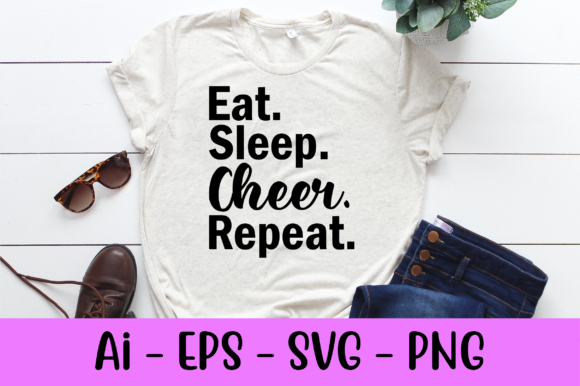
The Eat Sleep Cheer Repeat Svg carries a distinct energy. It is not subtle; it is bold, rhythmic, and designed to be read quickly. For an embroidery designer, the layout is crucial. If the text is stacked too tightly, the machine will struggle to separate the words without the fabric puckering. If the letters are too thin, they may disappear into the weave of the material.
Visually, the design feels like it belongs in a high-energy environment. It screams "team spirit" and "support." This makes it an excellent candidate for a tote bag design or a sweatshirt embroidery project intended for a game day event. The mood is celebratory, which translates well to handmade products meant to boost morale. However, the challenge lies in balancing that energy with the limitations of thread. A design that works perfectly on a digital mockup can sometimes look cluttered once converted into stitches, especially if the stitch density is not optimized for the specific fabric texture you are using.
Real-World Application: The Boutique Tote Scenario
To truly evaluate Eat Sleep Cheer Repeat Svg, I ran a simulation based on a common request I get from small business owners. Imagine you are preparing a batch of custom embroidered tote bags for a local youth cheer squad. You want these bags to be durable enough for daily use but stylish enough to serve as a marketing tool for your shop.
In this scenario, placing the Eat Sleep Cheer Repeat Svg on the front center of a canvas tote requires careful consideration. Canvas is a textured fabric that can hide fine details. If the design relies on tiny running stitch accents, they might get lost in the weave. Conversely, if the design uses heavy fill stitch areas, the back of the tote could become stiff and difficult to fold. I found that this design works best when the lettering is given ample breathing room. The repetition in the title ("Eat Sleep Cheer Repeat") creates a natural rhythm that can be leveraged by adjusting the spacing between lines during digitization.
For a custom apparel project like a hoodie, the design becomes even more versatile. It fits perfectly on the left chest area for a subtle nod or across the back for a statement piece. The key here is the contrast. If you are stitching this on a dark navy hoodie, you need bright, high-visibility thread colors. On a light gray shirt, the same threads might wash out unless you adjust the underlay settings. This is where the true value of a good embroidery file comes in—it must adapt to the substrate.
Where Caution is Required
Not every surface is created equal, and Eat Sleep Cheer Repeat Svg has its limits. While it is robust for standard garments, there are specific scenarios where you should proceed with caution. Small hoop sizes are a primary concern. If you attempt to stitch this on a 4x4 inch frame, the details might get cut off or the text might become illegible due to compression.
Textured fabrics, such as fleece or boucle, present another hurdle. The uneven surface can cause needle deflection, leading to misaligned stitches. Similarly, stretchy fabrics like jersey require a stabilizer that can handle tension without tearing. If you are planning to use this for baby embroidery on a onesie, ensure the design does not have sharp corners or dense areas that could irritate sensitive skin. Dark fabrics are also tricky; without a proper white underlay, the colored threads might bleed through, ruining the crispness of the design.
Curved surfaces like caps add another layer of complexity. While the design might look great flat, the curvature of a hat can distort the perspective of the text. I recommend testing this on a cap before committing to a large order. Additionally, if the design includes decorative accents or tiny lettering, these elements are prone to fraying after frequent washing. For products that need to withstand heavy use, like kitchen towels or aprons, you must verify that the stitch density is sufficient to hold the shape over time.
Impact on Brand and Customer Trust
In the world of Etsy sellers and craft businesses, the quality of your finished product directly impacts customer trust. A sloppy stitch job can ruin a beautiful design, regardless of how creative the concept is. Eat Sleep Cheer Repeat Svg offers a strong foundation for building brand consistency because of its clear message. When customers see a clean, well-executed design on a personalized gift or a holiday embroidery item, they perceive professionalism.
This design enhances the perceived value of a handmade product. It transforms a simple t-shirt or mug into a memorable keepsake. The visual appeal of the design, when stitched correctly, encourages buyer engagement and repeat purchases. However, if the design is poorly digitized, it can have the opposite effect, making a boutique look amateurish. Therefore, the investment in checking the digital embroidery file before production is non-negotiable.
Practical Designer Notes for Execution
Before you start stitching, there are several steps I always take to ensure success with designs like Eat Sleep Cheer Repeat Svg.
- Test on Scrap Fabric: Always run a test stitch on a scrap piece of the same material you plan to use. This reveals issues with tension, puckering, or thread breakage before you waste a finished product.
- Check Thread Color Contrast: Evaluate how the chosen threads interact with the background fabric. High contrast usually yields the best results for text-heavy designs.
- Review Stitch Density: Ensure the design isn't too dense for the fabric type. Too much thread can cause the fabric to bunch up, while too little can leave gaps.
- Confirm Hoop Size: Verify that the design dimensions fit within your available hoop size without cropping essential details.
- Inspect Small Details: Zoom in on the digital preview to check for tiny elements that might not survive the embroidery process.
- Test Black and White Mockups: Sometimes color distracts from the structural integrity of the design. A black and white view helps identify spacing issues.
- Use Proper Stabilizer: Match the stabilizer weight to the fabric. Heavy fabrics need heavy stabilizers, and vice versa.
- Licensing Check: Confirm whether the design allows for commercial use. Many graphics sold as templates have restrictions on selling finished items.
If the product description mentions machine embroidery design capabilities but lacks specific details on file formats or stitch counts, do not guess. Contact the provider or test the file yourself. The difference between a successful commercial embroidery project and a failed one often comes down to these preliminary checks.
Ultimately, Eat Sleep Cheer Repeat Svg is a versatile asset for any creator looking to add a touch of team spirit to their collection. Whether you are crafting a wedding gift, creating small shop merchandise, or designing a printable mockup for a client, this design provides a solid starting point. Just remember that the magic happens in the execution. With the right preparation, attention to detail, and respect for the materials, this design can elevate your work from a simple craft to a professional offering.